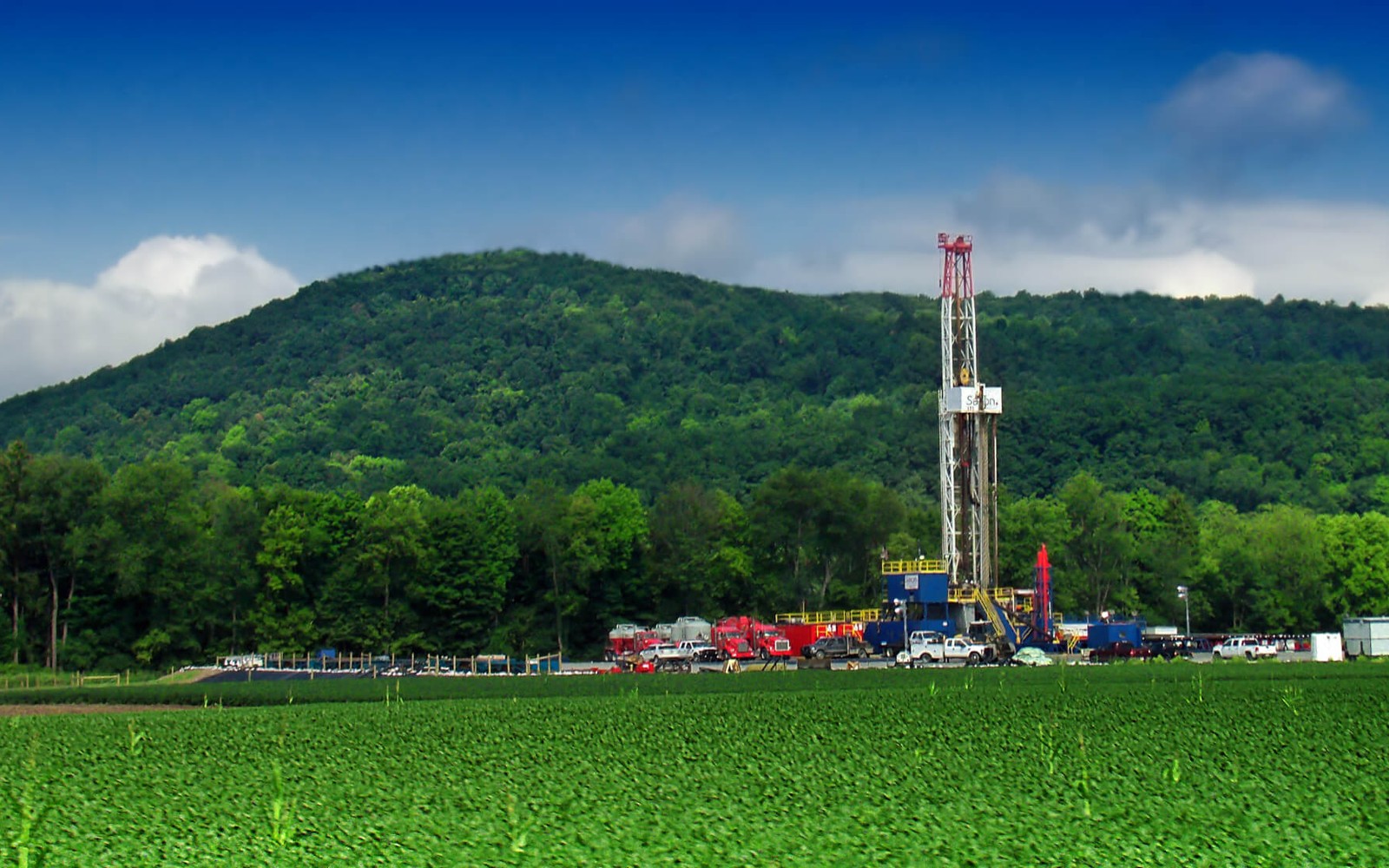
Marcellus Shale Mineral Rights
The Marcellus is the reason most Pennsylvania mineral owners have a royalty check to complain about at all, and it's also the reason so many of those checks are smaller than they should be.
The owner's grandfather used to say the Marcellus was 'the shale that finally paid,' and for a lot of families in southwestern and northeastern Pennsylvania, that's true. Wells that started producing in the late 2000s and into the 2010s turned quiet farm ground into gas country almost overnight. But owning a piece of the Marcellus isn't the same everywhere in the state, and it isn't the windfall the early news stories made it sound like.
In Washington, Greene, and Fayette counties you're sitting on wet gas and natural gas liquids, which means more processing, more midstream fees, and more line items subtracted before a royalty ever reaches your mailbox. Up in Susquehanna, Bradford, Tioga, and Lycoming counties it's mostly dry gas, fewer deductions, but a royalty stream that lives and dies with the Henry Hub price. We buy and evaluate Marcellus mineral and royalty interests across both regions, and we've learned that owners in each one are frustrated for different reasons.
Wet Gas Counties vs. Dry Gas Counties
Southwestern Pennsylvania's Marcellus is liquids-rich, which sounds like a good thing until you see your division order statement. Ethane, propane, and butane have to be separated out at a processing plant before the residue gas gets to market, and operators like Range Resources, EQT, and CNX pass a share of those gathering, compression, dehydration, and fractionation costs back to royalty owners as post-production deductions. Depending on your lease language, those deductions can eat a real chunk of the top-line value before you ever see a number.
Head northeast into Susquehanna, Bradford, or Wyoming County and the picture changes. That's dry gas territory, dominated by Coterra (the old Cabot Oil & Gas leases) and a handful of others, and while post-production costs still show up, there's no fractionation plant taking a cut. What both regions share is a decline curve: Marcellus horizontal wells drop off fast in the first two to three years, then flatten into a long, low tail. If your royalty check today looks a lot smaller than it did five years ago, that's usually the well doing exactly what shale wells do, not evidence something was done wrong.
Spacing Units and Why Your Acreage Might Be Pooled with Neighbors
Marcellus horizontal laterals commonly run 5,000 to 10,000 feet and cross multiple original farm tracts, which means your mineral interest is likely pooled into a spacing unit with several neighboring parcels rather than tied to one single well pad. That's normal, and it's part of why two owners on the same road can have wildly different royalty amounts even when they're in the same unit - the split depends on your net mineral acres relative to the whole unit, not only where your fence line sits.
If you've never pulled your division order or gone through the well's production history on the DEP's oil and gas reporting site, that's worth doing before you make any decision about your interest. It tells you which wells are actually draining your unit, roughly where they sit in the decline curve, and whether there's undrilled acreage nearby that could still see activity.
Act 13, Impact Fees, and What They Don't Cover
Pennsylvania never passed a severance tax on Marcellus gas the way West Virginia or Texas taxes production. Instead, the 2012 Act 13 impact fee charges drillers a flat per-well fee that scales down over the life of the well and gets distributed to counties and municipalities for roads, water systems, and emergency services. That fee doesn't touch your royalty check one way or the other - it's a separate pot of money that goes to local government, not to mineral owners. We mention it because a lot of families assume Act 13 money is somehow tied to their royalty, and it isn't.
What does touch your check is the Guaranteed Minimum Royalty Act, the 1979 state law that requires most PA oil and gas leases to pay a royalty of at least one-eighth of gross value received at the wellhead. Some operators have tried to net post-production deductions against that floor in ways owners believe violate the law's intent, and it's been the subject of real litigation in this state. If your royalty statement looks like it's dipped under that one-eighth line after deductions, that's worth reviewing with an attorney who handles PA oil and gas leases specifically.
What Buyers Actually Look At
When we evaluate a Marcellus interest, we're looking at which operator holds the lease, how far along the well or wells are on the decline curve, whether there's remaining undeveloped acreage in your unit that could get drilled or refractured, and how clean the title is going back through the chain of ownership. A producing interest with a strong operator and several years of consistent royalty history evaluates very differently than a non-producing interest that's only ever been leased and never drilled.
None of that means every offer you get is fair. We've seen buyers lowball owners who don't have their own production data, and we've seen owners turn down reasonable offers because a cold-call letter quoted a number with no basis behind it. We'll walk you through what we're looking at and why, the same way we'd want it explained to us.
Resolve the Statement Question Before Comparing the Number
Each answer points back to a Pennsylvania deed, lease clause, unit record, paid decimal, production month, deduction line, or written term that can be checked.
It usually comes down to your net mineral acres inside the pooled spacing unit, your specific lease's royalty fraction and post-production cost language, and which wells in the unit are actually producing. Two neighbors can own the same acreage size and still see very different checks.
No. Act 13 impact fees are paid by the operator on a per-well basis and distributed to county and municipal governments and state agencies for infrastructure and services. It's entirely separate from royalty payments to mineral owners.
It depends on the year and the market. Wet gas in the southwest carries natural gas liquids value but also more processing deductions; dry gas in the northeast has fewer deductions but tracks the Henry Hub price directly. Neither region is reliably 'worth more' - it varies with commodity pricing and your specific lease terms.
In some cases yes, if your deed and lease language allow splitting by formation or depth, though it's less common than a full mineral or royalty sale. We can look at your documents and tell you what's actually possible for your specific interest.
Yes, non-producing leased acreage in an active Marcellus play still has value tied to the likelihood of future development, though it typically evaluates lower than a producing interest with royalty history.
Carry the Same Statement Into the Next Review
The same tract, lease clause, unit participation, paid decimal, production month, and deduction question carry into each of these records.
Utica Shale Mineral Rights
Own deep Utica or Point Pleasant mineral rights in southwestern Pennsylvania? We evaluate stacked-lateral interests fairly and explain the deductions honestly.
Reading Your Royalty Statements
A plain-English walk through your Pennsylvania royalty statement, including why post-production deductions eat into the check and how to check the math.
Division Orders Explained
What a Pennsylvania division order actually is, why it shows up after you inherit or sell an interest, and what to check before you sign one.
Put This Pennsylvania Interest on the Statement Review
Share the Pennsylvania county, interest type, producing status, operator if known, recent statement detail, and the decision that needs a clearer answer.